
Overview of Brief
As a component of QUT’s Digital Portfolio, students are required to undertake a digital audit, develop a search engine marketing campaign and social media strategy and create content. The Cancer Council Queensland requested that students build awareness, increase registrations, and educate workplaces and schools about the QUEST program, using maximum promotion for minimum cost.
CCQ’s QUEST program aims to promote 5 key undertakings that individuals and communities can implement to prevent cancer. That is, quit smoking, understand the body, eat well, be sun safe and take time to be active. The following analysis outlines how these objectives were planned and executed.
Digital Audit
In order to determine how digital media could transform Cancer Council Queensland, it was necessary to assess the company’s current strategy. CCQ seek to reduce the burden on individuals, respond to community needs and raise dedicated funds. CCQ share vast amounts of content. The following three posts are examples of this –
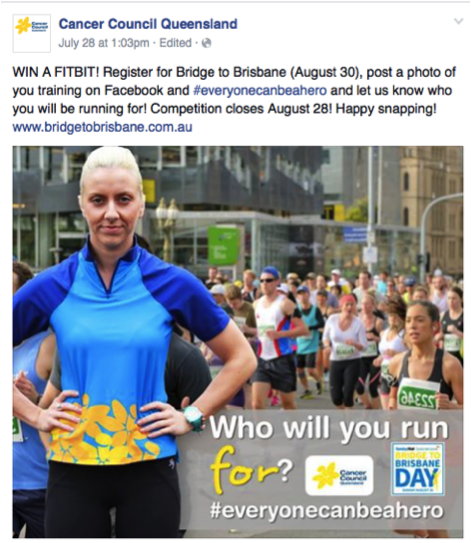
Bridge to Brisbane: CCQ posted the following Facebook message on July 28, 2015 – “WIN A FITBIT! Register for Bridge to Brisbane, post a photo of you training on Facebook and #everyonecanbeahero and let us know who you will be running for! Competition closes August 28! Happy snapping! www.bridgetobrisbane.com.au.” This campaign is targeting two large consumer segments. Firstly, those interested in health and wellbeing. This will typically be a younger age group (18 – 29 years old). This segment will be motivated by the chance to win a Fitbit Fitness Tracker, as well as the opportunity to participate in a physically challenging activity. Secondly, those who have been affected, either directly or indirectly, by cancer. This will typically be an older age group (30 – 55). This segment will be emotionally or morally motivated by the opportunity to support a cause close to them. The ideal action of this promotion is to attract more registrations for the Bridge to Brisbane, and increased exposure for the event.
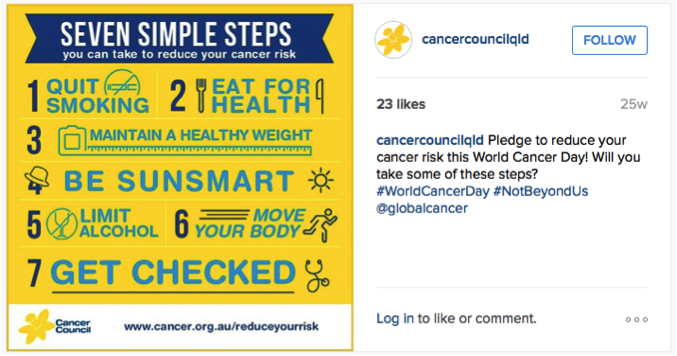
Preventative Measures: CCQ posted the following Instagram photo on February 10, 2015 – “Pledge to reduce your cancer risk this World Cancer Day! Will you take some of these steps? #WorldCancerDay #NotBeyondUs”. This campaign is targeting the CCQ’s followers more broadly. This will be predominately 18 – 39 year olds (82%), living in metropolitan areas in Queensland. The ideal action from this promotion is to persuade followers to undertake these simple 7 steps, in an effort to reduce the rate of Cancer diagnosis.
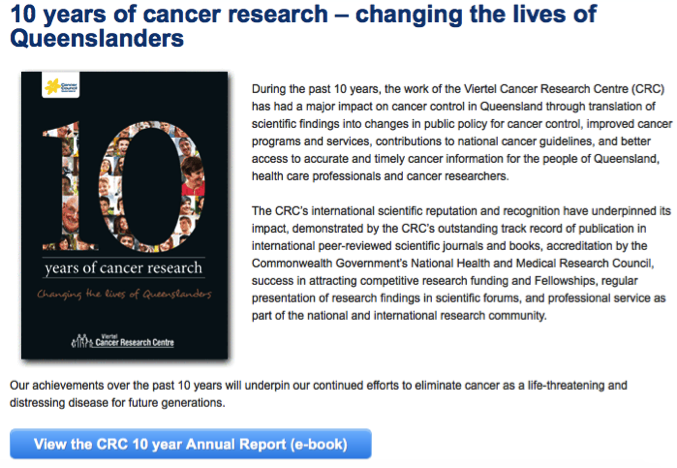
10 Year Annual Report: CCQ collated a report summarising cancer research over the past decade. This sought to inform stakeholders of their contribution towards the progression in cancer awareness, prevention and treatment. This is likely to be targeting older consumers (30 – 60 years old), who may work in the medical industry or have a vested interest in cancer research. The ideal action from this report is that readers to pass this information onto other stakeholders, and to build interest in the field to encourage further research and funding.
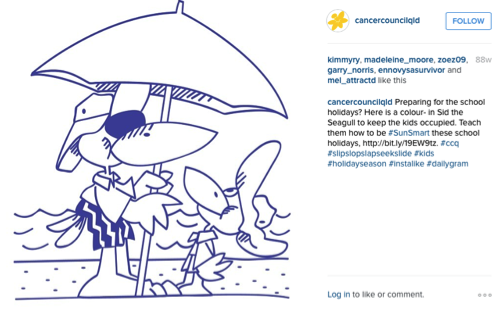
CCQ’s digital strategy was largely consistent with their traditional advertising and integrated marketing communications. For example, the Council’s 1981 “Slip Slop Slap” campaign has now been replicated across both traditional and digital platforms.
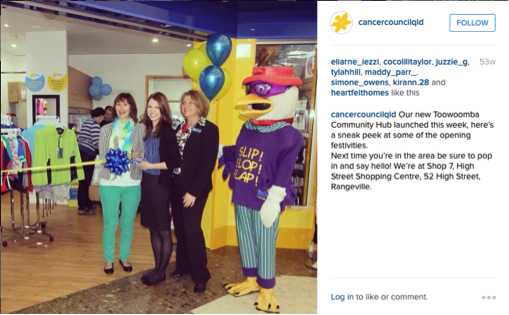
Overall, there is little evidence of optimization of the digital assets through search or analytics to measure and enhance performance. Furthermore, there appears little effort to capture or use data to personalize messaging. Nor are there outstanding examples to suggest the activation of a digital strategy through well- targeted content or evidence of large followings across its digital platforms. While they post a lot of content, it is not strategic and generally repetitious. Furthermore, community management appears an afterthought, with little seeding of content, scarce consumer interaction or customer service.
For a full explanation of the digital audit, please click here
Search Engine Marketing Strategy
The following SEM strategy sought to target schools and workplaces.
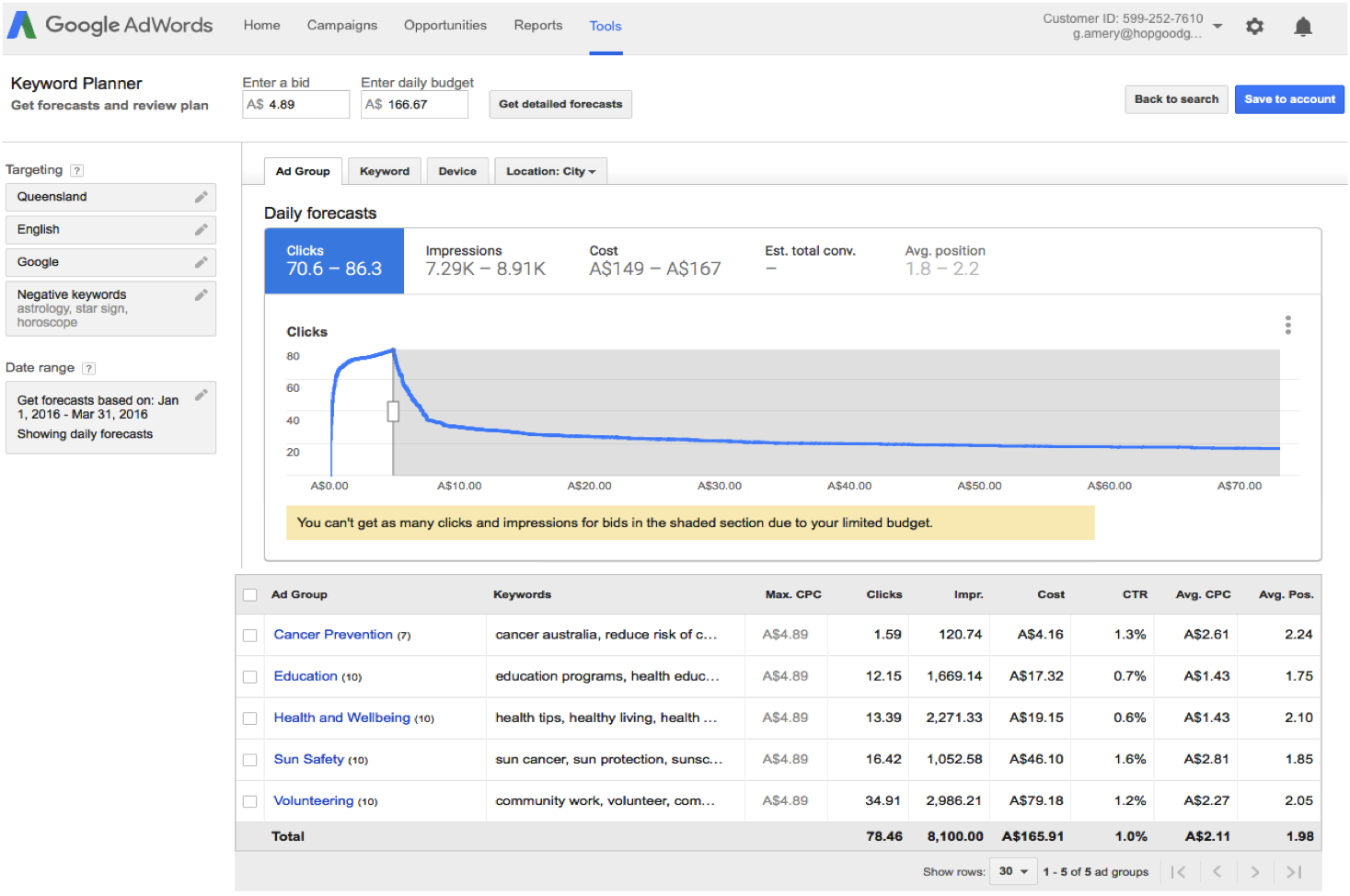
QUEST for Healthy Schools
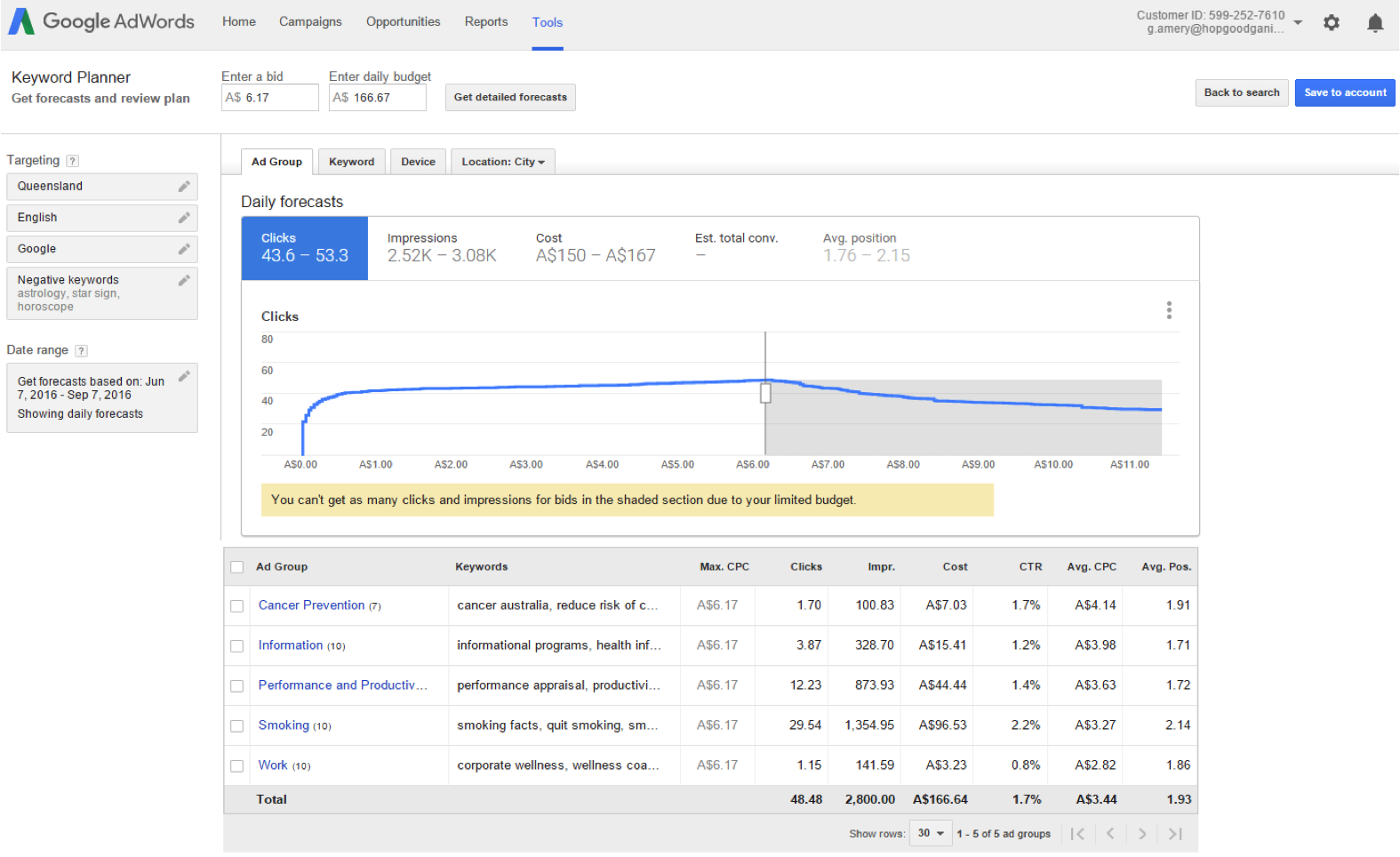
QUEST for Productive Workplaces
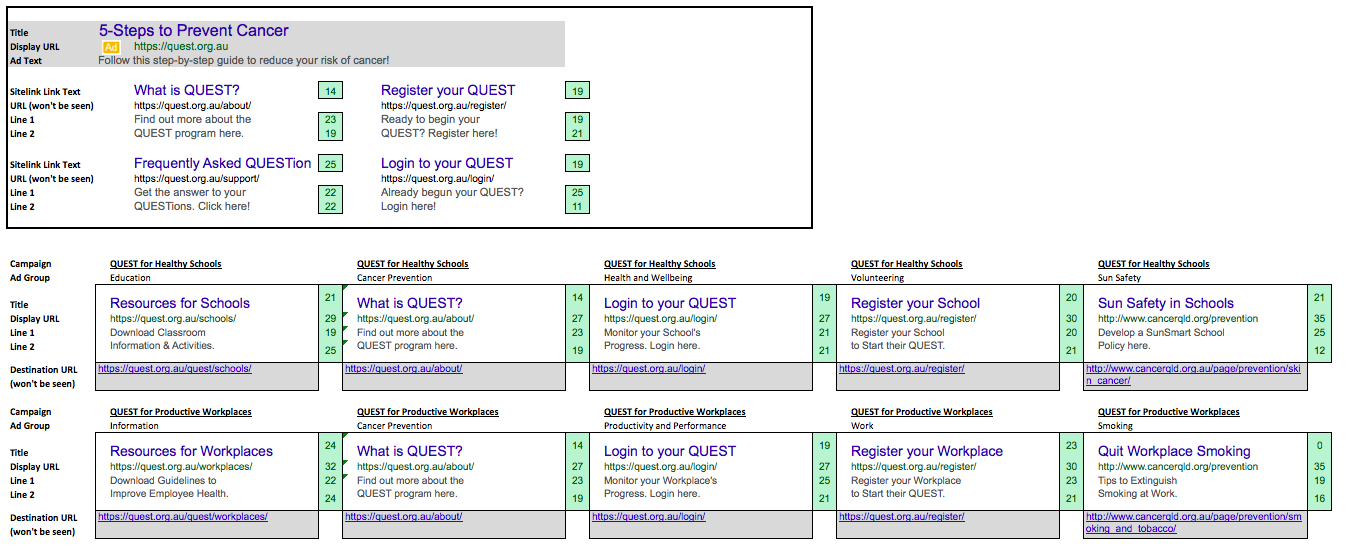
From the keywords and adgroups identified, a number of sitelinks could be built.
For a full explanation of the SEM strategy, please click here.
 georgiamayamery